
.svg)
Procédures opérationnelles standard dans les restaurants : pourquoi elles sont importantes (Guide 2026)
Découvrez pourquoi les procédures opérationnelles standardisées dans les restaurants sont plus importantes que jamais en 2025. Découvrez comment les SOP améliorent la conformité, la cohérence et le contrôle des coûts.
Points clés à retenir : procédures opérationnelles standard dans les restaurants
- Les procédures opérationnelles standard (SOP) des restaurants garantissent la cohérence entre les équipes, les quarts de travail et les établissements.
- Les restaurants s'appuient sur des procédures opérationnelles standardisées (SOP) et des listes de contrôle SOP pour garantir la sécurité alimentaire, la formation et le respect des normes opérationnelles.
- Des cadres SOP solides favorisent la conformité des restaurants, la préparation aux audits et l'efficacité opérationnelle.
- Les flux de travail basés sur des procédures opérationnelles standardisées améliorent la formation, l'intégration et la fidélisation du personnel des restaurants.
- Les systèmes opérationnels tels que MarketMan prennent en charge les processus opérationnels standardisés (SOP) liés aux stocks et aux achats, contribuant ainsi à renforcer la discipline opérationnelle.
- En 2026, les procédures opérationnelles standardisées (SOP) sont essentielles pour développer des chaînes de restaurants multi-sites et maintenir l'excellence opérationnelle.
Dans cet article
- Que sont les procédures opérationnelles standard dans la restauration et pourquoi sont-elles importantes ?
- Comment les procédures opérationnelles standardisées (SOP) des restaurants améliorent les opérations, la conformité et la formation
- Exemples de flux de travail opérationnels liés aux SOP
- Une liste pratique des catégories de procédures opérationnelles standard que chaque restaurant devrait documenter
- Pourquoi les procédures opérationnelles standardisées (SOP) restent essentielles pour l'exploitation des restaurants en 2026
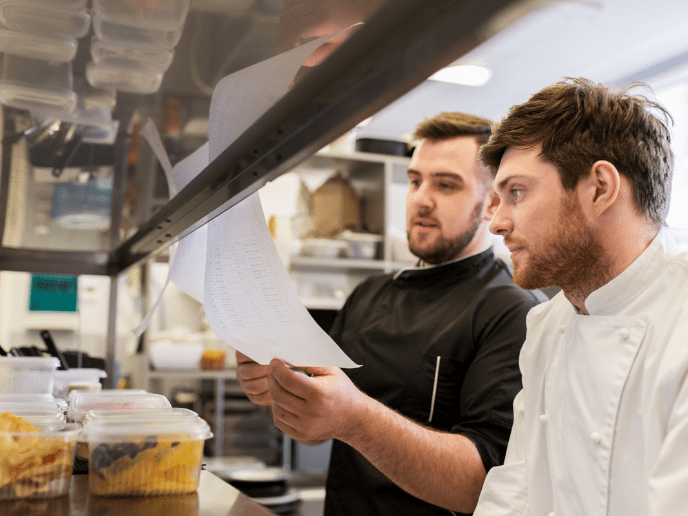
Liste de contrôle pour la formation des employés de l'arrière-boutique
Améliorez l'efficacité de l'arrière-boutique de votre restaurant grâce à notre guide complet des listes de contrôle de la formation, conçu pour rationaliser l'orientation et l'intégration des principaux postes de la cuisine.
Pourquoi les procédures opérationnelles standardisées sont-elles importantes pour la gestion moderne d'un restaurant ?
Les opérateurs sont confrontés à une augmentation des coûts de main-d'œuvre et à des chaînes d'approvisionnement imprévisibles, tandis que les clients attendent une expérience fluide. Sans structure, même les meilleures équipes finissent par s'épuiser.
C'est précisément cette complexité qui explique pourquoi les procédures opérationnelles standardisées sont devenues la clé du succès dans la gestion d'un restaurant.
Selon la National Restaurant Association (octobre 2025), près de la moitié des restaurants prévoient de mettre à jour ou de numériser leurs procédures opérationnelles standard (SOP) au cours de l'année à venir afin de se conformer aux nouvelles exigences en matière de sécurité alimentaire et de conformité au droit du travail.
Découvrons pourquoi les SOP sont importantes, comment les moderniser et comment les logiciels de gestion des stocks pour restaurants aident les restaurateurs à passer des listes de contrôle papier à des systèmes prédictifs qui permettent de gagner du temps, de l'argent et de réduire le stress.
Que sont les procédures opérationnelles standard des restaurants et pourquoi les restaurants en ont-ils besoin ?
Les procédures opérationnelles standard des restaurants sont des flux de travail documentés qui définissent la manière dont les tâches opérationnelles clés doivent être effectuées. Ces tâches comprennent :
- Procédures de sécurité alimentaire
- Instructions relatives au déroulement des tâches dans la cuisine
- Processus de suivi des stocks et des déchets
- Directives pour les commandes auprès des fournisseurs
- Procédures d'intégration et de formation du personnel
Ensemble, ces processus garantissent que chaque membre de l'équipe comprend exactement comment effectuer ses tâches de manière sûre et efficace. Grâce à des procédures opérationnelles standardisées solides, les exploitants créent un système stable dans lequel les responsables peuvent rapidement mettre à jour les étapes lorsque les réglementations changent, les fournisseurs changent ou les plats proposés évoluent.
Sans procédures structurées, les restaurants sont souvent confrontés à :
- qualité alimentaire inégale
- retards opérationnels
- infractions à la conformité
- processus de formation inefficaces
Comment les procédures opérationnelles standardisées des restaurants améliorent-elles la cohérence des opérations ?
L'un des principaux avantages des procédures opérationnelles standardisées dans la restauration est la cohérence.
Les restaurants gèrent chaque jour des dizaines de processus opérationnels : préparation, commande, réception des livraisons, inventaire, exécution des recettes, procédures de nettoyage, etc. Lorsque ces processus sont standardisés, les équipes travaillent avec clarté et confiance.
Des procédures opérationnelles standard claires permettent d'atteindre les objectifs suivants :
- qualité constante des aliments d'un quart de travail à l'autre
- résultats opérationnels prévisibles
- intégration plus rapide du personnel
- erreurs de formation réduites
- amélioration de la documentation relative à la conformité
Pour la gestion de restaurants multi-sites, les procédures opérationnelles standardisées (SOP) sont particulièrement importantes. Elles garantissent que chaque site respecte les mêmes normes de marque, même lorsque les équipes et les responsables diffèrent.
La cohérence permet en fin de compte de protéger les marges et d'améliorer les performances financières globales.
Quel rôle jouent les listes de contrôle et les modèles de procédures opérationnelles standardisées dans les opérations d'un restaurant ?
La documentation relative aux procédures opérationnelles standard (SOP) s'accompagne souvent de listes de contrôle et de modèles SOP. Ces outils traduisent les procédures en étapes concrètes que le personnel peut suivre au quotidien.
Voici quelques exemples courants :
- listes de contrôle pour la mise en place de la station de préparation
- procédures de stockage des ingrédients
- formulaires d'inventaire
- protocoles d'enregistrement des déchets
- listes de contrôle à l'arrivée des fournisseurs
Ces listes de contrôle transforment les procédures écrites en habitudes opérationnelles.
Par exemple, une procédure opérationnelle standard pour le comptage des stocks peut inclure les étapes suivantes :
- Comptez tout le stock dans l'entrepôt.
- Enregistrez les quantités pour chaque ingrédient.
- Comparez les chiffres avec l'utilisation théorique.
- Enquêtez sur les divergences.
MarketMan aide à mettre en œuvre des flux de travail opérationnels qui s'alignent sur de nombreux processus SOP de restauration grâce à des outils tels que le comptage mobile des stocks, le suivi des déchets et les rapports sur les écarts.
Quels sont les processus opérationnels couramment inclus dans les procédures opérationnelles standard des restaurants ?
Chaque restaurant élabore son propre manuel opérationnel, mais certaines procédures reviennent dans presque toutes les opérations couronnées de succès.
Vous trouverez ci-dessous 10 catégories de procédures opérationnelles standard (SOP) essentielles qui contribuent à l'efficacité des opérations dans un restaurant.
10 catégories de procédures opérationnelles standard essentielles pour les restaurants
- Procédures de sécurité alimentaire
Définir les températures de stockage, les exigences en matière d'hygiène et la prévention de la contamination croisée. - Workflows d'ouverture et de fermeture
Définissez clairement les responsabilités du personnel en cuisine pour la préparation des services et les tâches de fin de journée. - Procédures de gestion des stocks
Documentez la manière dont les ingrédients sont comptés, enregistrés et réconciliés. - Processus de commande des fournisseurs
Décrivez comment les décisions d'achat sont prises et comment les commandes sont passées. - Protocoles de réception des livraisons
Inclure la vérification des quantités, la numérisation des factures et les procédures de stockage. - Processus de normalisation des recettes
Définissez la taille des portions, les ingrédients et les étapes de préparation afin de garantir une qualité constante. - Workflows de suivi et de réduction des déchets
Surveillez les pertes, la surproduction et les retours afin d'améliorer la conformité en matière de développement durable. - Procédures d'intégration et de formation du personnel
Soutenez la formation cohérente du personnel de restaurant et le développement des employés. - Processus de documentation relatifs à l'audit et à la conformité
Préparer les restaurants aux inspections sanitaires et aux examens opérationnels. - Procédures de reporting de gestion
Définir comment les performances opérationnelles sont suivies et évaluées.
Ces catégories de procédures opérationnelles standard constituent la base de l'optimisation des flux de travail et de l'efficacité opérationnelle dans les restaurants.
Comment les procédures opérationnelles standard des restaurants favorisent-elles la conformité et les audits ?
Un cadre d'audit structuré, fondé sur des procédures opérationnelles standardisées, aide les restaurants à se préparer tout au long de l'année.
Les pratiques SOP typiques en matière d'audit comprennent :
- auto-audits opérationnels hebdomadaires
- examens mensuels de conformité
- Mises à jour trimestrielles des procédures opérationnelles standard
- approvisionnement en ingrédients et suivi des déchets documentés
Les plateformes opérationnelles peuvent faciliter ces processus en conservant des enregistrements liés aux flux de travail opérationnels.
Par exemple, MarketMan centralise les activités clés en coulisses telles que :
- suivi des stocks
- commande fournisseur
- calcul du coût de revient d'une recette
- rapprochement des factures
- suivi des déchets alimentaires
Ces systèmes offrent une visibilité sur les achats et l'utilisation des ingrédients, facilitant ainsi les processus opérationnels qui correspondent souvent à l'exécution des procédures opérationnelles standard (SOP) des restaurants.
Lorsque les auditeurs demandent des documents, le fait de disposer de dossiers organisés liés à ces flux de travail simplifie considérablement la production des rapports de conformité.
Comment les procédures opérationnelles standardisées améliorent-elles la formation et la fidélisation du personnel de restaurant ?
Tous les opérateurs savent que le roulement du personnel nuit aux marges. Mais ce qui est moins évident, c'est la manière dont les procédures opérationnelles standardisées (SOP) permettent de le réduire directement.
Lorsque les employés se sentent compétents et soutenus, leur fidélisation s'améliore. Les procédures opérationnelles standardisées accélèrent la formation en offrant aux nouvelles recrues une vision claire et détaillée, sans approximation ni frustration.
Une étude réalisée en 2025 par QSR Magazine a révélé que 68 % des employés du secteur hôtelier restent plus longtemps dans leur emploi lorsque les processus sont clairement définis. Lorsque les procédures opérationnelles standardisées décrivent clairement ce qu'est la réussite, la reconnaissance devient mesurable et la motivation augmente.
Les programmes de formation basés sur les SOP prennent en charge :
- intégration plus rapide du personnel
- des attentes plus claires en matière de performance
- réduction des erreurs opérationnelles
- amélioration de la confiance des employés
De nombreux restaurants intègrent des processus basés sur des procédures opérationnelles standardisées (SOP) dans leurs systèmes de formation afin que les nouveaux employés apprennent les procédures à travers des tâches opérationnelles réelles.
Par exemple, le personnel peut apprendre les procédures d'inventaire grâce à des systèmes utilisés pour les comptages quotidiens ou s'exercer aux processus de commande auprès des fournisseurs à l'aide d'outils d'achat.
Cette approche pratique renforce les procédures opérationnelles standard tout en aidant les employés à développer leurs compétences opérationnelles.
Comment MarketMan prend en charge les flux de travail opérationnels liés aux procédures opérationnelles standard (SOP) des restaurants
Si les procédures opérationnelles standard des restaurants définissent la manière dont le travail doit être effectué, les restaurants ont également besoin d'outils qui aident les équipes à suivre ces flux de travail de manière cohérente. MarketMan prend en charge plusieurs processus opérationnels qui correspondent souvent aux procédures opérationnelles standard des restaurants, notamment en matière de gestion des stocks, d'achats et d'exécution des recettes.
Normalisation des recettes et formation
La fonctionnalité « livre de recettes » de MarketMan aide les équipes à documenter et à standardiser les recettes afin que le personnel puisse suivre des étapes de préparation cohérentes. Elle comprend :
- Recettes claires avec les ingrédients indiqués
- Guide intégré pour contrôler les portions et garantir une cohérence
- Visibilité des allergènes pour favoriser la sensibilisation à la sécurité alimentaire
- Formation et intégration plus faciles du personnel de restaurant
- Recettes standardisées pour la gestion de restaurants multi-sites
Procédures d'inventaire simplifiées
Le comptage des stocks est souvent un élément clé des processus opérationnels d'ouverture ou de clôture. Les outils mobiles de comptage des stocks de MarketMan permettent aux équipes d'effectuer ces tâches plus rapidement et plus facilement.
Les équipes peuvent utiliser des outils d'inventaire mobiles pour :
- Comptez les stocks directement depuis les zones de stockage ou les chambres froides.
- Enregistrez rapidement les quantités d'ingrédients
- Comparer les chiffres avec l'utilisation théorique
- Identifier les écarts à l'aide des rapports de variance
Visibilité financière et achats
La tenue de registres d'achats organisés fait partie intégrante des procédures opérationnelles d'un restaurant. Les outils d'automatisation de MarketMan contribuent à simplifier ces flux de travail.
- Numérisation des factures par IA pour capturer les données des factures fournisseurs
- Rapprochement des factures et des bons de commande
- Réduire les tâches manuelles de saisie et de rapprochement
- Maintenir la visibilité sur les coûts des ingrédients
Commandes plus intelligentes et rentabilité des menus
La commande des ingrédients et la gestion des coûts alimentaires sont deux tâches opérationnelles qui ont un impact significatif sur les marges des restaurants. MarketMan fournit des outils qui prennent en charge ces flux de travail :
- Recommandations de commande basées sur l'IA et les habitudes d'utilisation
- Meilleure protection des marges grâce à des achats plus intelligents
- Création de recettes par IA pour un développement plus rapide des menus
- Visibilité des coûts pour faciliter le contrôle des portions et la rentabilité des menus
Suivi des déchets et rapports opérationnels
Un suivi cohérent des déchets aide les restaurants à améliorer leurs pratiques en matière de développement durable et à réduire leurs coûts alimentaires.
MarketMan contribue à renforcer ces habitudes opérationnelles grâce à :
- Registres des déchets permettant au personnel d'enregistrer les pertes et les préparations excessives
- Meilleure visibilité sur les schémas de gaspillage récurrents
- Rapports COGS pour suivre la performance des coûts alimentaires
- Rapports sur la rentabilité des menus pour évaluer les performances des plats
Ensemble, ces outils contribuent à renforcer les flux de travail sur lesquels reposent de nombreuses procédures opérationnelles standard dans les restaurants, offrant ainsi aux exploitants une meilleure visibilité sur les stocks, les achats et les performances en cuisine.
Pourquoi les procédures opérationnelles standardisées sont essentielles pour les restaurants en 2026
Dans le contexte hôtelier complexe d'aujourd'hui, les procédures opérationnelles standardisées des restaurants apportent clarté aux employés, cohérence aux clients et responsabilité à la direction.
Lorsqu'ils sont soutenus par des systèmes opérationnels qui renforcent les flux de travail clés, les restaurants bénéficient d'une meilleure visibilité sur les achats, les stocks et l'utilisation des ingrédients, ce qui facilite le maintien de normes cohérentes.
Alors que les restaurants continuent de s'adapter aux nouvelles réglementations, aux défis liés à la main-d'œuvre et aux attentes en matière de durabilité, l'importance des procédures opérationnelles standardisées dans les restaurants ne fera que croître.
Les exploitants qui mettent en place aujourd'hui des cadres SOP solides positionnent leurs restaurants pour des opérations évolutives, efficaces et résilientes demain.
Vous souhaitez découvrir comment les flux de travail opérationnels liés aux stocks et aux achats peuvent contribuer à renforcer les processus des restaurants ? Explorez MarketMan et découvrez comment ses outils basés sur l'IA aident les restaurants à rationaliser leurs opérations en cuisine et à maintenir une visibilité sur les coûts alimentaires, les stocks et les commandes auprès des fournisseurs.
Contributeurs
Rejoignez plus de 18 000 restaurants et recevez les meilleurs conseils gastronomiques dans votre boîte mail.
Vous pourriez également être intéressé par
Prêt à commencer ?
Parlez à un expert en restauration dès aujourd'hui et découvrez comment MarketMan peut aider votre entreprise.