
.svg)
The Ultimate Culinary Terms Guide for Chefs & Restaurant Staff
Maîtrisez les termes culinaires essentiels grâce à notre guide complet de A à Z destiné aux restaurateurs, chefs et personnel de cuisine. Apprenez les techniques de cuisson, la manipulation des ingrédients et les méthodes de préparation afin d'améliorer l'efficacité, la communication et la qualité dans les opérations de cuisine de votre restaurant.
Que vous soyez restaurateur, chef cuisinier ou membre essentiel de l'équipe de cuisine, la maîtrise des termes culinaires est fondamentale pour assurer le bon fonctionnement et le professionnalisme de la cuisine.
Notre guide des termes culinaires de A à Z offre un aperçu complet des termes clés relatifs aux techniques de cuisson, aux ingrédients et aux méthodes de préparation, fournissant à votre équipe un langage commun qui favorise une exécution précise, une communication rationalisée et une formation efficace.
Avec ces termes à portée de main, vous serez bien préparé pour améliorer la cohérence et augmenter l'efficacité de votre cuisine.
Termes culinaires pour les restaurants
Maîtrisez le vocabulaire essentiel de la cuisine grâce à ce guide des termes culinaires de A à Z, conçu pour aider les chefs et le personnel de cuisine à exceller dans les techniques de cuisson, les ingrédients et les méthodes de préparation.

What Are Common Culinary Terms?
Culinary terms are essential words and phrases that cover everything from cooking techniques and food preparation to ingredient handling and plating.
They form the foundation of a shared kitchen language, covering topics like knife skills, cooking methods, and even plating techniques.
By understanding these terms, everyone in the kitchen—from sous chefs to line cooks—can work from the same playbook, ensuring a consistent and efficient approach to each dish.
Why It’s Important to Know Your Culinary Terms
In every kitchen, from small cafes to bustling restaurants, accurate use of culinary terms is vital for smooth operations.
By knowing and applying these terms, chefs, line cooks, and kitchen staff can communicate clearly and efficiently, reducing errors, shortening prep times, and enhancing the overall dining experience.
For restaurateurs, fluency in culinary terminology supports effective management and training, helping build a well-informed, cohesive team.
101 Popular Cooking and Restaurant Terms
We’ve gathered an extensive list of 93 essential culinary terms every chef, restaurateur, and kitchen team member should know. This A-Z guide covers the core areas of cooking techniques, specialized ingredients, and food preparation methods—designed to support your team in delivering exceptional culinary experiences, every time.
Cooking Terms A-F
A
À la Carte (noun): Serving each item individually rather than as part of a set menu or meal.
Al Dente (adjective): Cooking pasta or vegetables to a slight firmness for optimal texture.
All Day (noun): The total amount of a dish or item needed across all orders.
Amuse-Bouche (noun): A complimentary, single-bite appetizer served before the main course.
Aromatics (noun): Ingredients like herbs, spices, and vegetables used to add depth and fragrance to dishes.
Aspic (noun): A gelatin-based preparation used to set savory ingredients, often containing meat or seafood.
B
Bain-Marie (noun): A hot water bath used to gently cook or keep food warm without direct heat contact.
Bard (verb): To wrap lean meat in fat to prevent drying during cooking.
Baste (verb): To brush or spoon juices over food while it cooks, adding moisture and flavor.
BEO (Banquet Event Order) (noun): A document that details an event’s menu, guest count, and timing.
Blanch (verb): To briefly boil food, then shock it in ice water to preserve color and texture.
Braise (verb): To sear food, then simmer it in a small amount of liquid for tenderness.
Brine (verb): To soak food in a salt solution to enhance flavor and tenderness.
Broil (verb): To cook food under direct high heat for quick browning.
Brunoise (noun): A fine dice of vegetables, approximately 1/8 inch in size.
C
Caramelize (verb): To cook sugar or other ingredients until they develop a rich, golden-brown color.
Charcuterie (noun): Prepared meats like sausages, pâtés, and cured meats, often served on a platter.
Chiffonade (noun): Thinly sliced leafy vegetables or herbs.
Concassé (verb): To peel, seed, and chop tomatoes to create a smooth texture.
Confit (verb): To cook meat slowly in its own fat to preserve and add flavor.
Coulis (noun): A smooth purée of vegetables or fruit used as a sauce.
Cream (verb): To beat butter and sugar until light and airy, creating a smooth texture.
Cure (verb): To preserve food by adding salt, sugar, or other curing agents.
Custard (noun): A thickened mixture of milk and eggs used in desserts or savory dishes.
D
Deglaze (verb): To add liquid to a pan to dissolve browned bits, creating a flavorful sauce.
Demi-Glace (noun): A rich brown sauce made by reducing Espagnole sauce and brown stock.
Dredge (verb): To lightly coat food with flour or another dry ingredient before cooking.
Dress (verb): To add dressing to salad ingredients for enhanced flavor.
Dry Rub (noun): A blend of spices and herbs applied to meat for added flavor.
E
Emulsify (verb): To mix two ingredients, like oil and water, that don’t naturally combine.
En Croute (adjective): Baked food encased in a pastry crust.
En Papillote (adjective): Food wrapped in parchment or foil to steam in its own juices.
Espagnole (noun): A rich brown mother sauce made with a brown roux, mirepoix, and stock.
Extract (noun): Concentrated flavors, such as vanilla extract, used to enhance taste.
F
Ferment (verb): To allow bacteria or yeast to convert sugars, adding depth and complexity to food.
Filet (verb): To remove bones from fish or meat, creating clean, boneless portions.
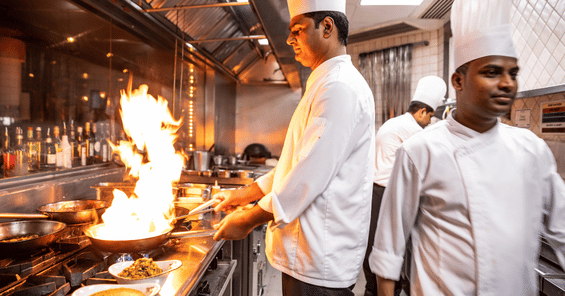
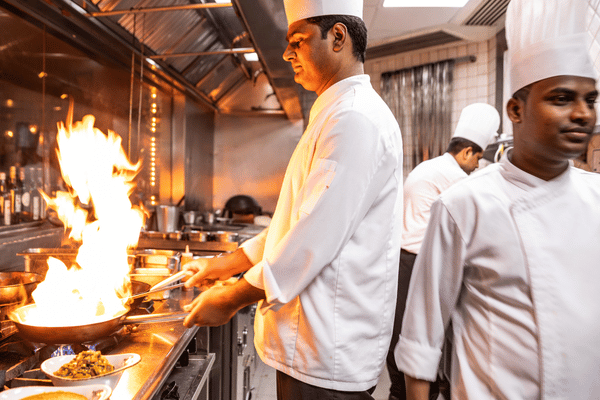
Flambé (verb): To ignite alcohol in a pan to create a burst of flame and enhance flavor.
Fold (verb): To gently combine ingredients to avoid deflating the mixture.
Fricassée (noun): A white meat stew with a creamy sauce.
Fry (verb): To cook food in hot oil, creating a crisp, golden exterior.
Culinary Terminology G-L
G
Ganache (noun): A mixture of chocolate and cream, used for glazing or filling.
Garnish (noun): Decorative edible items added to enhance presentation and flavor.
Gelatinize (verb): To cook starches until they absorb liquid, thickening dishes.
Ghee (noun): Clarified butter used in Indian cooking.
Grill (verb): To cook food over direct heat, often on an open flame.

H
Herb (noun): Leaves of plants used to enhance flavors in cooking.
Hollandaise (noun): A creamy sauce made with egg yolks, lemon, and butter.
Hydrate (verb): To add water or liquid to dried ingredients, restoring their texture.
Honey Roast (verb): To glaze food with honey before roasting, creating a sweet, caramelized crust.
I
Infuse (verb): To steep herbs, spices, or other ingredients in liquid, imparting their flavor.
Icing (noun): A thin, sweet coating for pastries and cakes.
Immersion (noun): Blending ingredients with an immersion blender in the same container.
J
Julienne (verb): To slice food into thin, matchstick-sized pieces.
Jus (noun): The natural juices from meat, often used as a sauce.
Jerky (noun): Dried, seasoned strips of meat preserved by dehydration.
K
Knead (verb): To work dough by pressing and folding it, developing gluten.
Kosher Salt (noun): Coarse, additive-free salt preferred for its clean taste.
L
Lard (verb): To insert strips of fat into lean meat, adding moisture during cooking.
Leaven (verb): To add an agent like yeast to dough, causing it to rise.
Liaison (noun): A mixture of egg yolks and cream used to thicken sauces.
Restaurant Kitchen Terms M-R
M
Macerate (verb): To soak fruit in liquid to soften and enhance flavor.
Marinate (verb): To soak food in a seasoned liquid for added flavor and tenderness.
Mince (verb): To finely chop ingredients for even cooking.
Mirepoix (noun): A mix of onions, carrots, and celery used as a flavor base.
Mise en Place (noun): Preparing and arranging ingredients and tools before cooking.
N
Nappe (noun): The desired thickness of a sauce that coats the back of a spoon.
Nonstick (adjective): A type of cookware coating that prevents food from sticking.
O
Oven-Roast (verb): To cook food uncovered in an oven, allowing it to brown.
Oeufs (noun): Eggs, often prepared in various techniques in traditional cooking.
P
Parboil (verb): To partially cook food in boiling water before further preparation.
Pâté (noun): A smooth spread made from ground meat or vegetables.
Peel (verb): To remove the outer layer of fruits and vegetables.
Poach (verb): To gently cook food in simmering liquid.
Proof (verb): To allow dough to rise, developing structure and flavor.
Puree (verb): To blend ingredients into a smooth, thick consistency.
Q
Quenelle (verb): To shape soft food into an oval with two spoons.
Quinoa (noun): Protein-rich seeds cooked as a versatile grain alternative.
A
Reduce (verb): To simmer a liquid, concentrating its flavors.
Render (verb): To melt fat from meat over low heat.
Roux (noun): A mixture of fat and flour used to thicken sauces.
Food Terminology S-Z
S
Sauté (verb): To cook food quickly in a small amount of oil, creating a golden exterior.
Score (verb): To make shallow cuts on the surface of food to enhance texture or appearance.
Sear (verb): To brown the surface of food over high heat, locking in flavor and moisture.
Simmer (verb): To cook food in liquid just below boiling, allowing flavors to meld.
Sous Vide (adjective): Food vacuum-sealed and cooked in a precisely controlled water bath.
Steep (verb): To soak herbs, tea, or spices in hot liquid to extract flavors and aromas.
Supreme (verb): To remove the skin and pith from citrus fruits, leaving only the flesh.
T
Temper (verb): To slowly adjust the temperature of an ingredient, often for eggs or chocolate, preventing separation or curdling.
Terrine (noun): Layers of meat, vegetables, or other ingredients pressed into a mold.
Toast (verb): To brown food by exposing it to dry heat, enhancing flavor.
Truss (verb): To tie meat, often poultry, to keep its shape during cooking.
U
Umami (noun): The savory “fifth taste” found in foods like tomatoes, mushrooms, and soy sauce.
Unmold (verb): To remove food from a mold, often using a gentle loosening technique.
V
Velouté (noun): A smooth, stock-based sauce thickened with roux, one of the classic French mother sauces.
Vinaigrette (noun): A dressing made from oil, vinegar, and seasonings, commonly used for salads.
W
Whip (verb): To rapidly beat ingredients, incorporating air to increase volume, as with cream or egg whites.
Wilt (verb): To cook greens briefly until they soften without losing color or nutritional value.
Y
Yeast (noun): A microorganism used as a leavening agent in baking, causing dough to rise by fermentation.
Yield (noun): The amount of product or portion a recipe produces.
Z
Zest (verb): To remove the outer peel of citrus fruits, adding bright, concentrated flavor to dishes.
Zabaione (noun): A light Italian custard made with egg yolks, sugar, and wine, often served warm.

MarketMan is a cloud-based restaurant inventory management software that takes the guesswork out of running a restaurant and simplifies all back-of-house operations. Streamline everything from recipe costing and suggestive ordering to waste and vendor management all on one unified platform. Book a demo and learn how MarketMan can help your business today!
Contributeurs
Rejoignez plus de 18 000 restaurants et recevez les meilleurs conseils gastronomiques dans votre boîte mail.
Vous pourriez également être intéressé par

Prêt à commencer ?
Parlez à un expert en restauration dès aujourd'hui et découvrez comment MarketMan peut aider votre entreprise.